Characterization of gut microbiomes in rural Honduras reveals uncharacterized species and associations with human genetic variation
Abstract
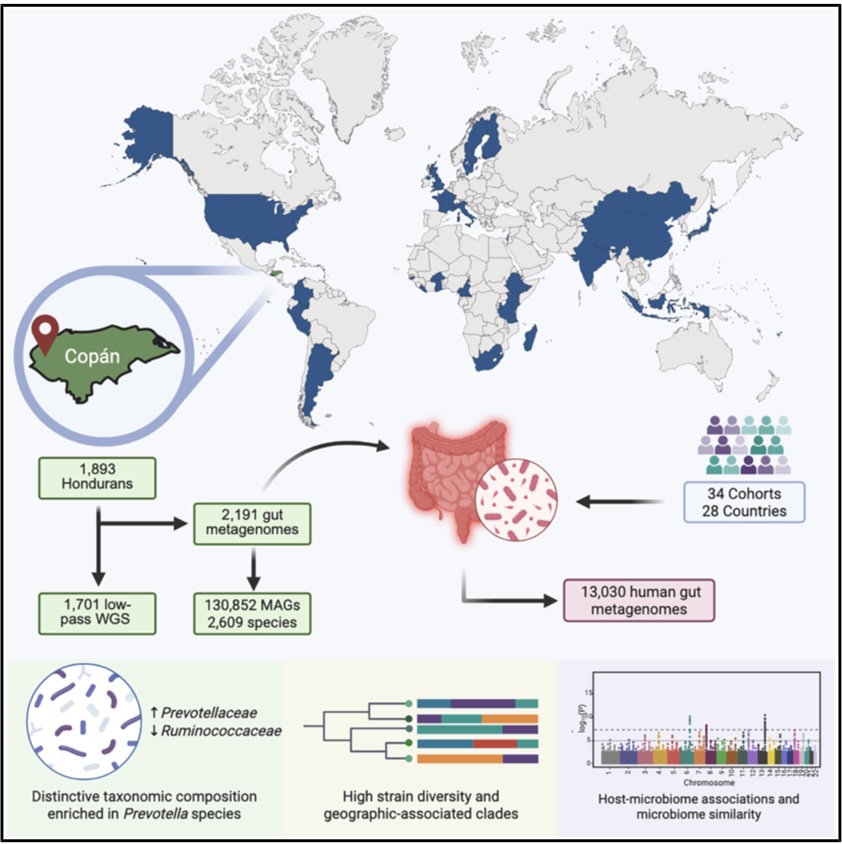
The gut microbiome is integral to human health, yet research data to date have emphasized industrialized populations. Here, we performed large-scale shotgun metagenomic sequencing on 1,893 individuals from rural Honduras, providing the most comprehensive microbiome dataset from Central America. We identify a distinct microbial composition enriched in Prevotella species. Longitudinal analysis in 301 individuals reveals microbiome instability, with shifts in taxonomic diversity and metabolic potential, including changes associated with severe acute respiratory syndrome coronavirus 2 infection. Additionally, we characterize the gut virome and eukaryotic microbiome, identifying uncharacterized viral taxa and a high prevalence of Blastocystis species in individuals with greater microbial diversity. Finally, by integrating host genomic data, we uncover significant host-microbiome associations, highlighting the influence of human genetic variation on microbial composition. These findings expand our understanding of microbiome diversity in non-industrialized populations, underscoring the need for global microbiome research.
Citation:
Beghini F, Brito IL, Gerstein M, Christakis NA. Characterization of gut microbiomes in rural Honduras reveals uncharacterized species and associations with human genetic variation. Cell Rep. 2026 Jan 27;45(1):116724. doi: 10.1016/j.celrep.2025.116724. Epub 2025 Dec 18. PMID: 41420859.